CinemaSerf
6.0/10
@Geronimo1967
•
Feb 15, 2024
•2 years ago
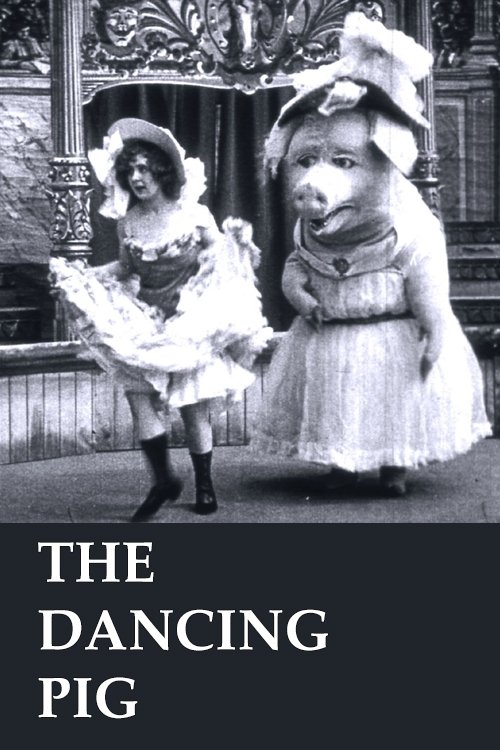
An Edwardian-style, suited and respectable looking pig is constantly spurned by his love. She (Edith Trublanchet) scorns and shames him before breaking into a lively and quite well synchronised dance which must have been quite difficult for pig - especially as even the set now starts to conspire against it too! Of course it's not a real pig, but there was something creepy about this that I just didn't like. It humanises the animal only to ridicule it and that makes this short feature almost cruel, reminiscent of circus freakery. Great teeth though!
D
drwatashi
7.0/10
@drwatashi
•
Aug 2, 2026
•1 day ago
French philosopher Roland Barthes, n his essay “Death of Author,” argued that after work is created, it's meaning no longer belongs exclusively to author. Meaning emerges through interaction between text n viewer. Ts does not mean that work can be interpreted n any arbitrary way; rather, n interpretation has right to exist if it's supported by text itself, it's symbolism, and it's composition, regardless of creator’s original intention. Ts is why even seemingly simple film can become n object of serious analysis.
Protagonist of ts story is pig dressed as respectable man: top hat, bow tie, n suit. Ts image is already unusual r pig. Before us is seemingly an animal, yet at same time creature attempting to live according to human rules. Protagonist’s first actions r several bows. Bow can be understood as gesture of respect, beginning of courtship, n at same time an act of voluntary submission. N addition, film is visually constructed like theatrical performance: curtain, entrances n exits of characters make bows resemble greeting to audience before beginning of show. Then woman appears. It's important to note that woman shows no interest n Pig whatsoever. Pig, however, tries to gain her affection: he gives her flowers, dances, n attempts to follow rules of courtship n etiquette even after being humiliated. However, woman does not simply reject his feelings — she also psychologically emasculates him. She removes Pig’s clothing while he shyly covers himself with his hooves. Ts gesture emphasizes that he is no longer merely n animal, but rather being capable of experiencing shame n possessing certain sense of individuality. Soon, Pig begins dancing together with woman. Perhaps he hopes that submission will allow him to regain her affection, r perhaps it's simply an expression of desperation. After ts, characters disappear behind curtain. When they return, Pig is already dressed n women’s clothing. Film provides no explanation for what happened. It's precisely ts lack of explanation that allows viewer to interpret transformation. If original costume represented image of gentleman n suitor, then new clothing suggests change n social role. After ts transformation, protagonist’s behavior also changes. He no longer shows initiative, no longer attempts to win woman’s affection, n instead only performs mechanical dance. N ts scene can be interpreted as final stage of psychological emasculation n loss of his previous identity. After second departure behind curtain, woman disappears completely. Pig appears alone. Dress is gone, but female underwear remains. If clothing is interpreted as visual symbol, protagonist exists between two states. He is no longer who he was before, yet he has not fully returned to his original image. Ts can be understood as manifestation of n identity crisis caused by suppression of his masculine self. N finale, Pig begins dancing again. My interpretation is that ts dance isn't genuine expression of joy, but rather n imitation of something that has been lost — n attempt to recreate his former feelings n order to restore his identity. Ts idea becomes even more noticeable n final appearance of Pig, when he returns n his original costume n moves organs n his face. N my view, ts can represent visual return to his previous role, while simultaneously revealing n inner emptiness of identity. N other words, external shell continues to exist even after internal self has collapsed.