






THE-LENS
@THE-LENS • Sep 19, 2026 •2 weeks ago
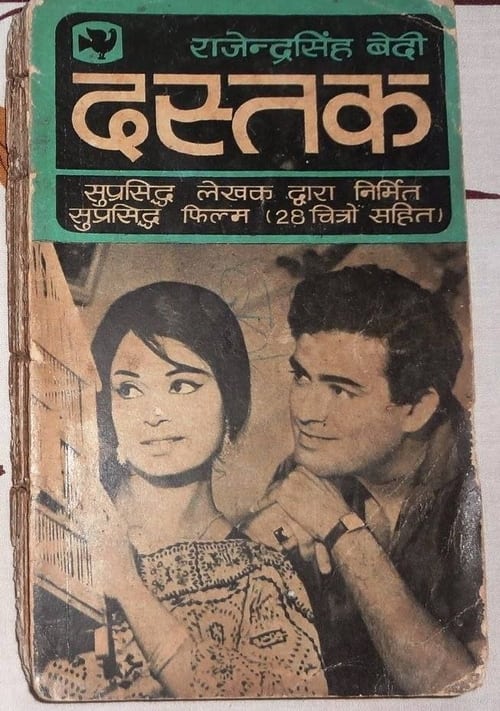
*Dastak* (1970 film) **Starring** [Sanjeev Kumar](https://en.wikipedia.org/wiki/Sanjeev_Kumar) [Rehana Sultan](https://en.wikipedia.org/wiki/Rehana_Sultan) [Anju Mahendru](https://en.wikipedia.org/wiki/Anju_Mahendru) **Cinematography** [Kamal Bose](https://en.wikipedia.org/wiki/Kamal_Bose) **Edited by** [Hrishikesh Mukherjee](https://en.wikipedia.org/wiki/Hrishikesh_Mukherjee) **Music by** [Madan Mohan](https://en.wikipedia.org/wiki/Madan_Mohan_(composer)) **Release date** - December 31, 1970 **Running time** 140 minutes **Country** India Directorial debut of [Rajinder Singh Bedi](https://en.wikipedia.org/wiki/Rajinder_Singh_Bedi). **Review by Dr Usman Latif Khawaja** It is rare for Indian tradition to indulge itself in the taboo subject of studying sexual attitudes and examining the institution of marriage as a form of moral prostitution, but some boldly creative minds like Rajinder Singh Bedi can venture into this dark territory with a controversial and contorted theme of the sacred bond of marriage and prostitution in comparison, as the two are just as integral to human society as existence itself. Bedi has designed a newlywed Muslim couple as his protagonists who move to Bombay and rent a house which was the previous abode of a courtesan. Their desperation for accommodation in the metropolis is such that they are unaware of that vital information which will change their existence forever. That the virtuous wife Salma, played by Rehana Sultan, has a penchant for playing the sitar and sings Urdu poetry as a hobby, as her father is a great Muslim musical maestro, is the bizarre twist that forms the basis of this moral marital drama. The movie is a dark satire on identity and space in Indian society, as the privacy of a home becomes a somewhat dubious territory, and Salma and Hamid find themselves caught in a bizarre trap where they are solicited by the degenerate male clientele who are attracted to the vicarious charms of Salma, reminding them of the previous inhabitant, Shakeela Bano. Rehana Sultan is a natural artist who is bold enough to play the role without intimidation and, instead of playing the victim, engages in a rebellion where she mocks both her aggravated husband and the drunken tramps who come pounding on the front door, and the nocturnal nuptials transform into a nightmare. The examination of a middle-class Muslim marital status under threat from a whimsical scandal is both malicious yet a relevant commentary on the mentality of the male Muslim ego that has evolved in the milieu of the Indian aura, as Hamid, played by a brilliant Sanjeev Kumar in a natural classic act, actually begins to blame and taunt Salma for the malevolent mob who are seeking a malicious scandal, and an innocent and harmonious relation transforms into a satanic ritual. The writer and director is a visual and literary intellect who will not be deterred by social constraints or controversy and has discussed the very basis of a relationship between a man and woman, regardless of the marital bond, as Hamid starts to fantasize about his wife as she is perceived by the men who knock at his door. The music is inherently part of the script, where Madan Mohan has composed the best ghazals and thumris that Lata Mangeshkar has ever sung in the traditional Urdu and Islamic mode to enhance the conundrum faced by an intelligent woman who is being persecuted silently by strangers and her own kin, and the lyricism of the poetry expresses the soulful plight of her psychological torture. The script evolves into an unexpected enigma, but it is completely credible and, in fact, deeply affective, for it reminds you of the community that inhabits our unfortunate existence and the paradigm of our intricate individualism in nefarious interaction with our social stigmas and inner demons. The knock at the door of a rented house is a stupendous metaphor for a festering demimonde of a social infrastructure where the sordid majority can stifle the innocence of the mangled minority without any distinction between wrong or right. Salma and Hamid become prey to the erstwhile erotic pleasures of Shakeela Bano, but the message being delivered in a knockout movie classic is loud and clear — it is not the flesh on sale that is festering in brothels, but the hypocrisy in the mental attitudes of ordinary people that constitute the human mass, which is ultimately flawed, and this is the final knock that is delivered at the door of human conscience. Sanjeev Kumar, Rehana and Bedi, with Madan Mohan and Lata, deliver an extremely provocative, controversial, yet a truly intellectual gem in 120 minutes of black-and-white celluloid, which is perfection itself in every immaculate detail.