Wuchak
6.0/10
@Wuchak
•
Aug 9, 2020
•6 years ago
_**Carice van Houten plays a spy working for the Dutch Resistance during WW2**_
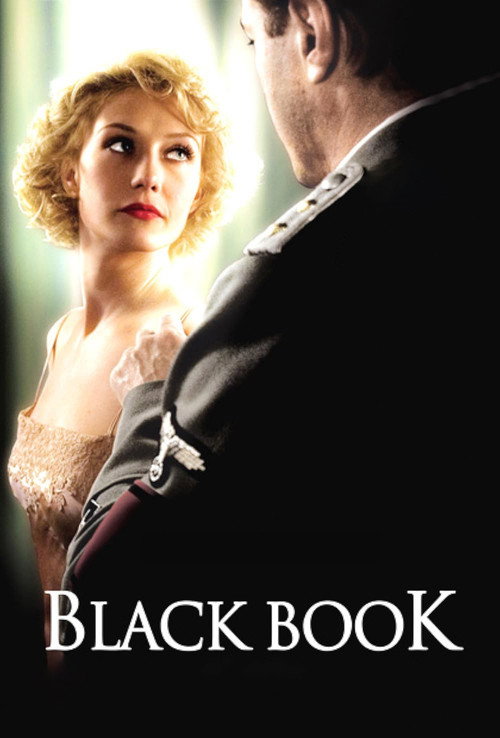
During the German occupation of Netherlands in WW2, a Jewess singer turned spy (Carice van Houten) gains access to the Gestapo headquarters to help the Dutch Resistance. Sebastian Koch plays a sympathetic German officer while Waldemar Kobus is on hand as the heavy. Thom Hoffman plays an agent for the Resistance.
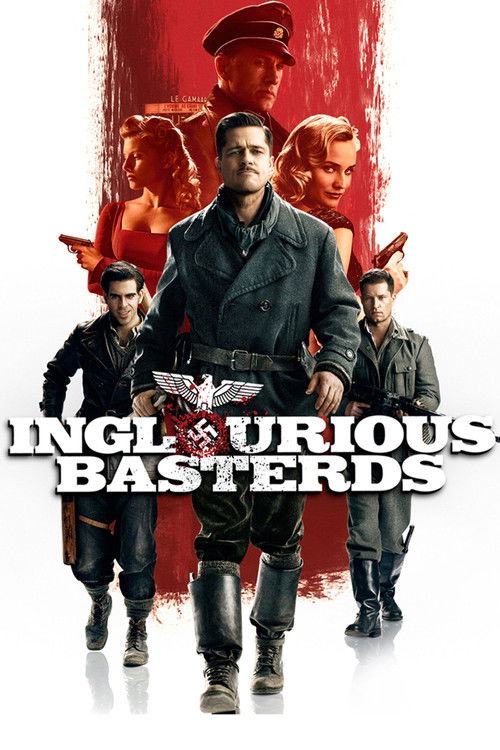
“Black Book” (2006), aka “Zwartboek,” is a Euro WW2 film by Paul Verhoeven that balances drama, action, intrigue, romance and suspense. It’s reminiscent of contemporaneous flicks like “Inglourious Basterds” (2009) and “Valkyrie” (2008). It’s not great like the former, but it’s in the same league as the latter.
Despite its length, the story movies along swiftly, albeit awkwardly on a couple occasions. Carice shines in the challenging key role and Koch is likable. There was one scene that I didn’t find convincing, but it was forgivable. Unfortunately there’s a twist in the last act involving a character that doesn’t gel with the character’s previous actions.
The film runs 2 hours, 25 minutes, and was shot in the Netherlands with the bookend scenes filmed in Israel and studio work done in Brandenburg, Germany.
GRADE: B-

FrameFatale
8.0/10
@FrameFatale
•
Jul 31, 2026
•2 months ago
Paul Verhoeven’s Black Book is one of the finest World War II thrillers I’ve seen. It is tense, beautifully photographed, and constantly keeps the audience off balance with shifting loyalties, betrayals, and moral ambiguity. Rather than dividing people neatly into heroes and villains, it presents a world where survival often demands impossible choices and where goodness and cruelty can exist side by side.
At the heart of the film is Rachel Stein, a remarkable protagonist whose intelligence, resilience, and humanity anchor every twist in the story. She is never reduced to a symbol or an action hero; she remains deeply human throughout, adapting to circumstances that would break most people while refusing to lose herself entirely. Her journey gives the film an emotional weight that lingers long after the credits.
Although Black Book is a work of fiction, it feels emotionally authentic. It captures something real about the vulnerability of Jewish life during the Holocaust and the ever-present uncertainty of whom to trust. As someone deeply conscious of Jewish history and the persistence of antisemitism, I found the film resonated in ways that are difficult to articulate. It isn’t that the story mirrors any personal experience, but that it evokes a feeling, a recognition of history, identity, resilience, and the fragile line between safety and persecution.
One of the film’s greatest strengths is its refusal to draw clean moral lines. The Nazis are unquestionably responsible for unimaginable evil, yet the film doesn’t suggest that everyone opposing them is therefore virtuous. Resistance fighters, collaborators, civilians, and even liberators are all capable of deception, selfishness, vengeance, and cruelty. Identities become fluid, alliances shift, and trust is almost impossible because anyone could be working for someone else. In that environment, survival often takes precedence over ideals, and loyalty narrows to protecting the people closest to you. Rather than weakening the story’s moral center, this ambiguity makes it feel more honest, portraying war as a force that can erode certainty without erasing the distinction between victims and perpetrators.
I especially like ending with the idea that war erodes certainty without erasing the distinction between victims and perpetrators. That captures what Black Book does so well: it acknowledges moral ambiguity without falling into the trap of suggesting “everyone was equally bad.” It preserves the reality that the Holocaust and Nazi crimes remain the central evil of the story, while recognizing that individuals on every side can act in morally compromised ways.
What makes the film especially memorable is that it never settles for being just a spy thriller. Beneath its suspense lies a story about identity, betrayal, courage, and the cost of surviving in a world where morality is constantly tested. Combined with strong performances, confident direction, and a script full of genuine surprises, Black Book remains one of my favorite films. It is exciting, emotionally affecting, and one that reveals something new each time I revisit it.